


I was born in south Louisiana, but I was not born of it. My mom and grandma happened to marry people who were from other states, and it distanced us from our Cajun heritage. As a result, I always knew about Cajun culture, but I didn’t feel like a part of it until I was an adult.
That all changed when I met my husband, who is part of a sprawling, card-playing, beer-drinking Cajun family. They accepted me with open arms, and I loved joining in on the fun.
Seven years ago, my husband and I moved our family from South Louisiana to Texas Hill Country. We moved for better work opportunities and to fulfill my lifelong dream of living somewhere that wasn’t Louisiana.
It hurts that we cut our kids off from the Cajun culture that they were born into. Our boys were only six months old when we moved so they don’t remember living in Louisiana. And since our daughter was born in San Antonio, she never lived there at all.
Family, hospitality, joie de vivre, and resilience are strong values in south Louisiana. We are keeping them. And we want our children to keep them too.
Why Cajun Culture Needs Preserving
During and after World War One, there was a national movement to “Americanize.” And in 1921, Louisiana rewrote its laws so that schools were required to instruct students in English. Many schools did not allow French to be spoken at all. Generations of Cajun and Creole children were physically punished for speaking their native language, and this created a sense of shame in being a French speaker.
The culture began to die along with its language, but luckily many people worked to preserve the culture and keep it intact. An organization called CODOFIL was founded in 1968 to promote the speaking of Louisiana French. In fact, when I was in school my French lessons started in fourth grade as a part of that movement.
Cajun Habits We Keep
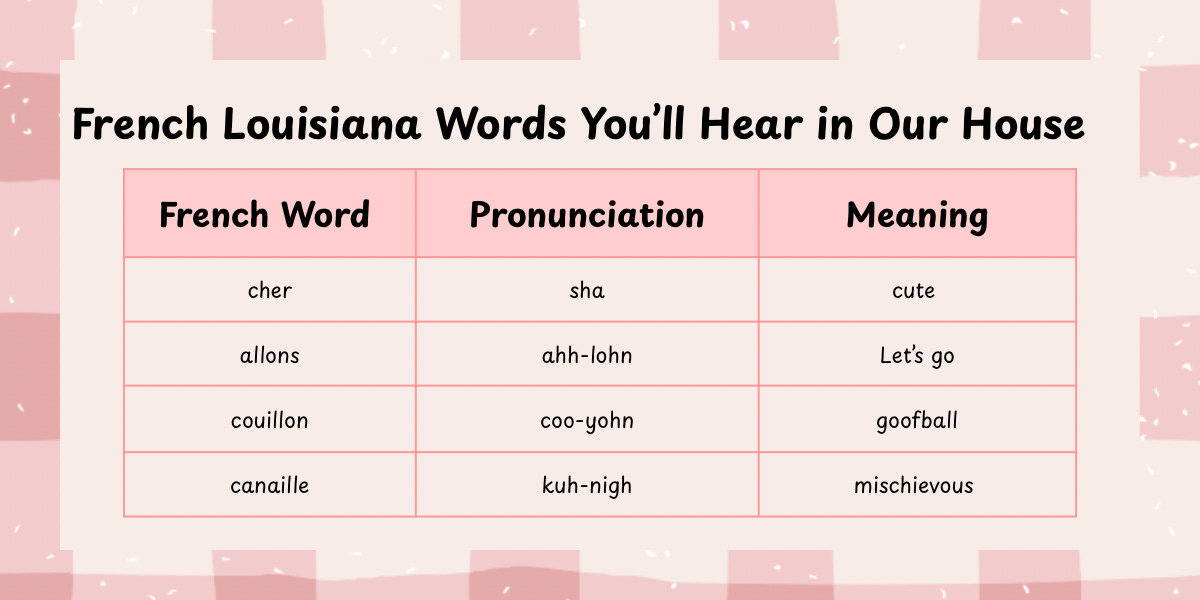
We use Louisiana French vocabulary in our household.
Even though I took French lessons from 4th grade all the way up until I was a sophomore in college, I never became fully fluent. I simply didn’t have anyone to practice with. My husband also never learned French, so we speak English at home. But many French words are mixed into conversations on a daily basis in Louisiana, and we still use those words with our kids. Take a look at my favorite koozie:
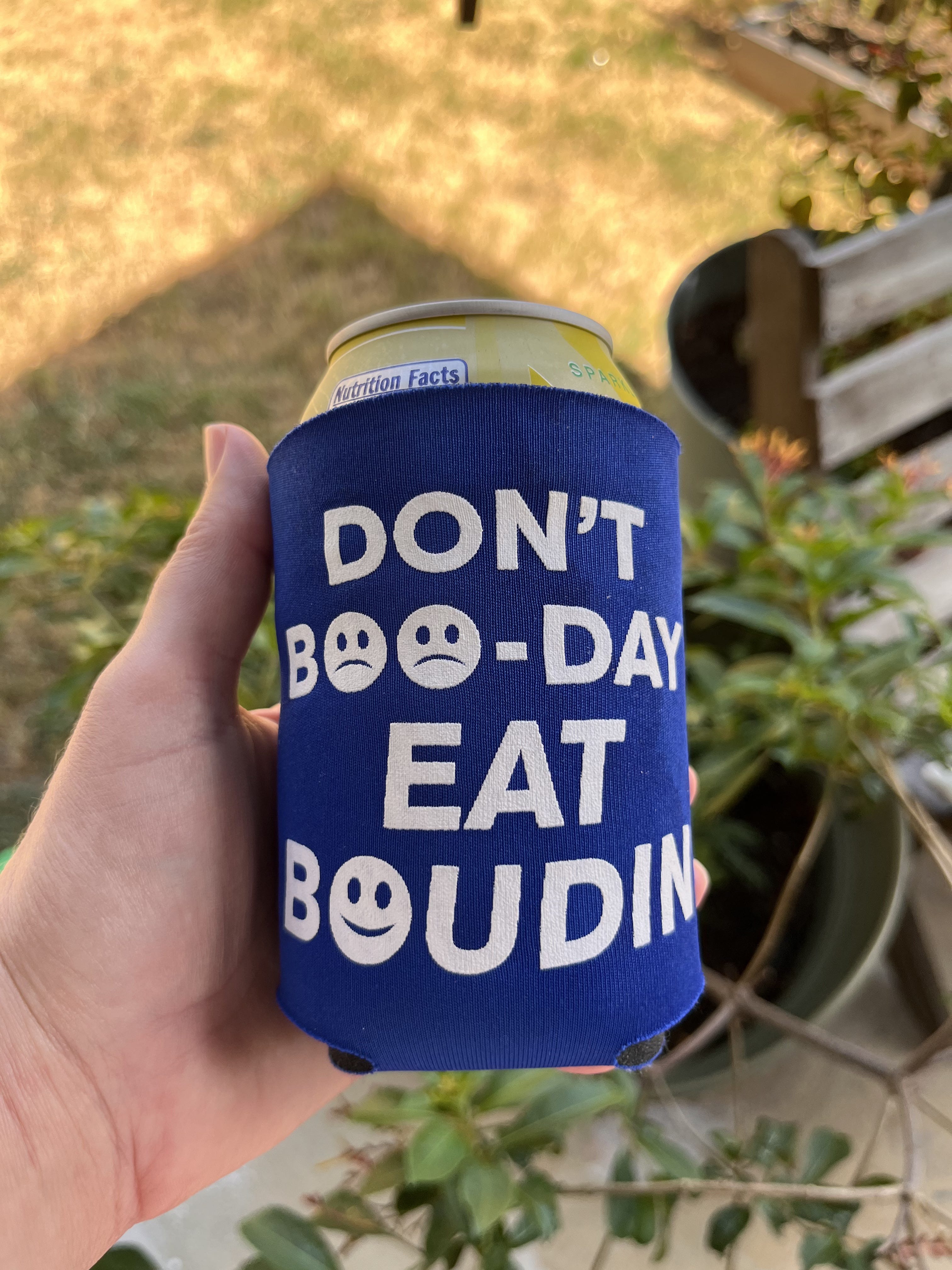
Let me translate for you: “Boo-day” is the phonetic spelling for the French word bouder which means to pout. Boudin is a delicious Louisiana sausage. So the koozie saying means, “Quit pouting, and eat.” Food solves all problems in south Louisiana.
We use our family vacations to visit Louisiana.
This is the most important thing we are doing. Family connection is extremely important in Cajun culture, so it is important to us that our kids know not just their grandparents, but also their aunts, uncles, cousins, great aunts, second cousins, etc.
We try to visit at least twice a year, and we go more often if we can. Our kids see Louisiana as a magical and mythical land. One of them even threatened to run away and move back there. (He was mad that I made him clean his room.)
Though we spend the majority of our time there visiting family, we also make a point to visit places specifically to teach our kids about south Louisiana history. Our favorites so far are:
Vermilionville, a living history museum along the banks of the Vermilion River in Lafayette.
The kids absolutely fell in love with Vermilionville. They ran from house to house excitedly.
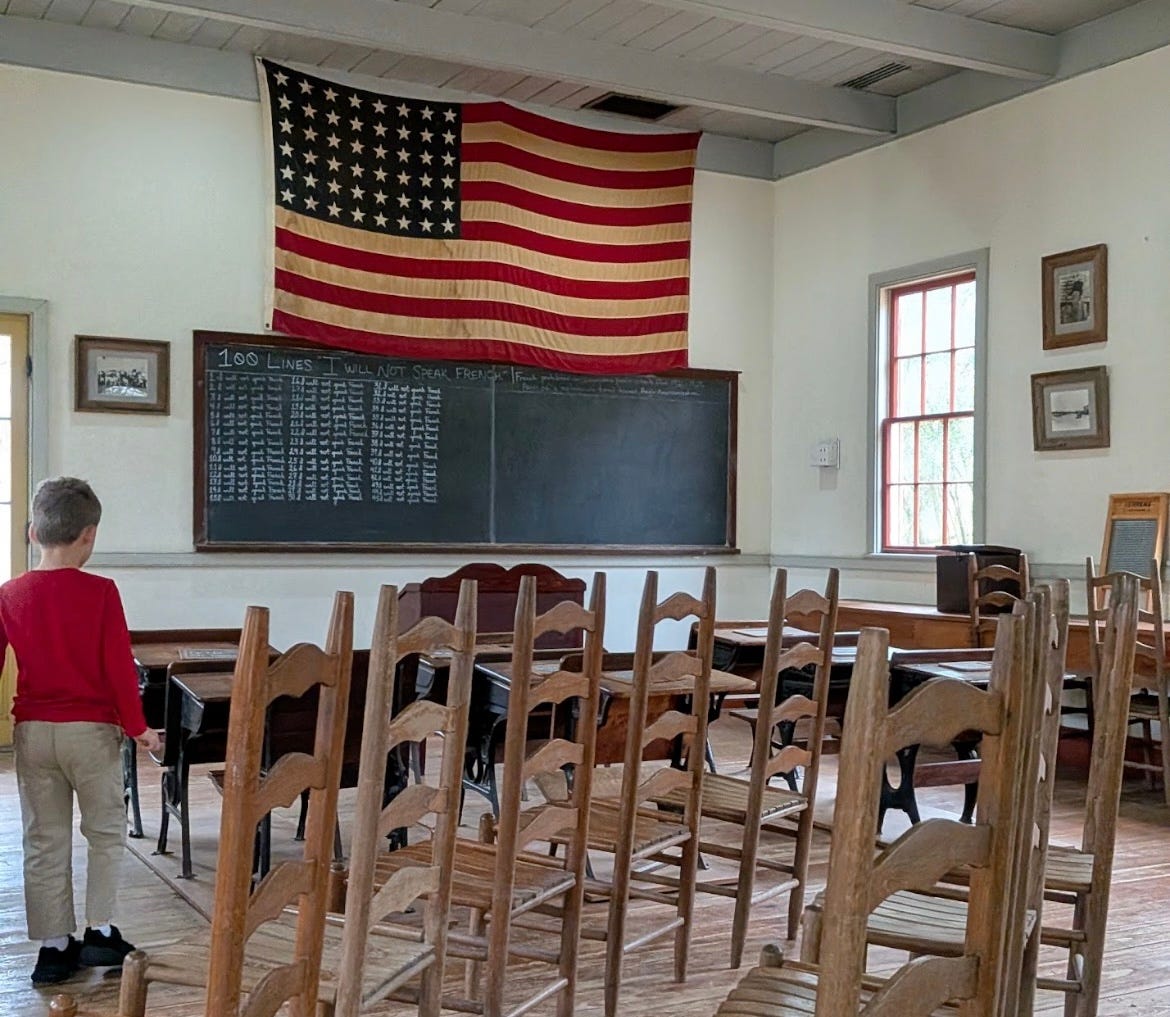
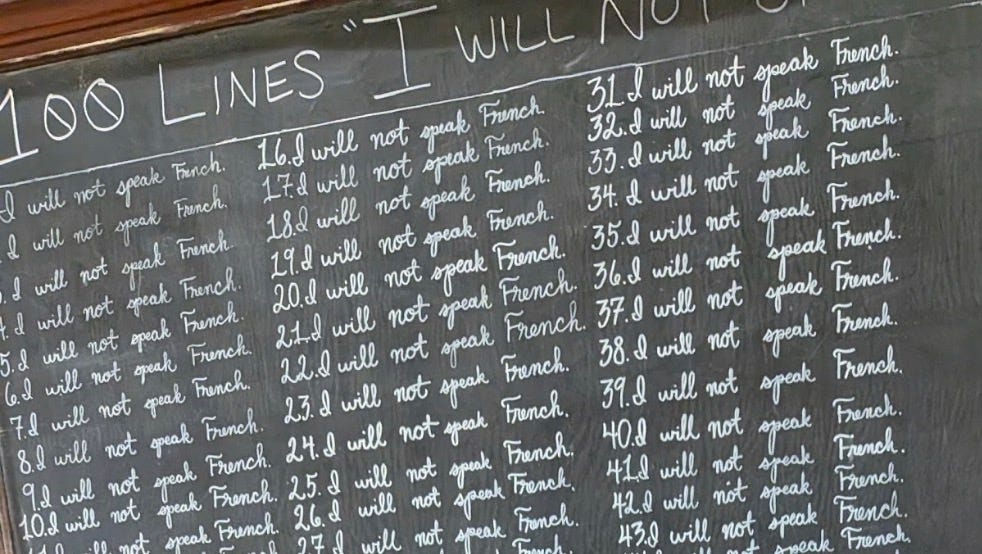
They were especially impressed with the one-room schoolhouse. “I will not speak French” was written over and over again on the chalk board – a common punishment for children who did slip into their native language.
The Acadian Memorial in St. Martinville.
This little museum honors the history of the Acadian people with a beautiful mural depicting the arrival of the Acadians in Louisiana after they were expelled from their homeland in Nova Scotia by the British in 1755. There is also a wall of names of the original Acadians who arrived in Louisiana after the expulsion and the museum provides paper and crayons so that you can make rubbings. We were able to locate ancestors on both sides of our family and make rubbings of their names.
Longfellow-Evangeline State Historic Site, also in St. Martinville.
This sweet park’s mission is to explore the cultural interplay among the diverse peoples who populated the region. This includes Acadians, Creole, Africans, Indians, Spaniards, Frenchmen, enslaved people, and free people of color. There is an 1815 plantation home to explore and a recreated Acadian homestead. Best of all, the small museum has many old-fashioned toys and the park rangers let my kids play with them. This was a major highlight for the kids.
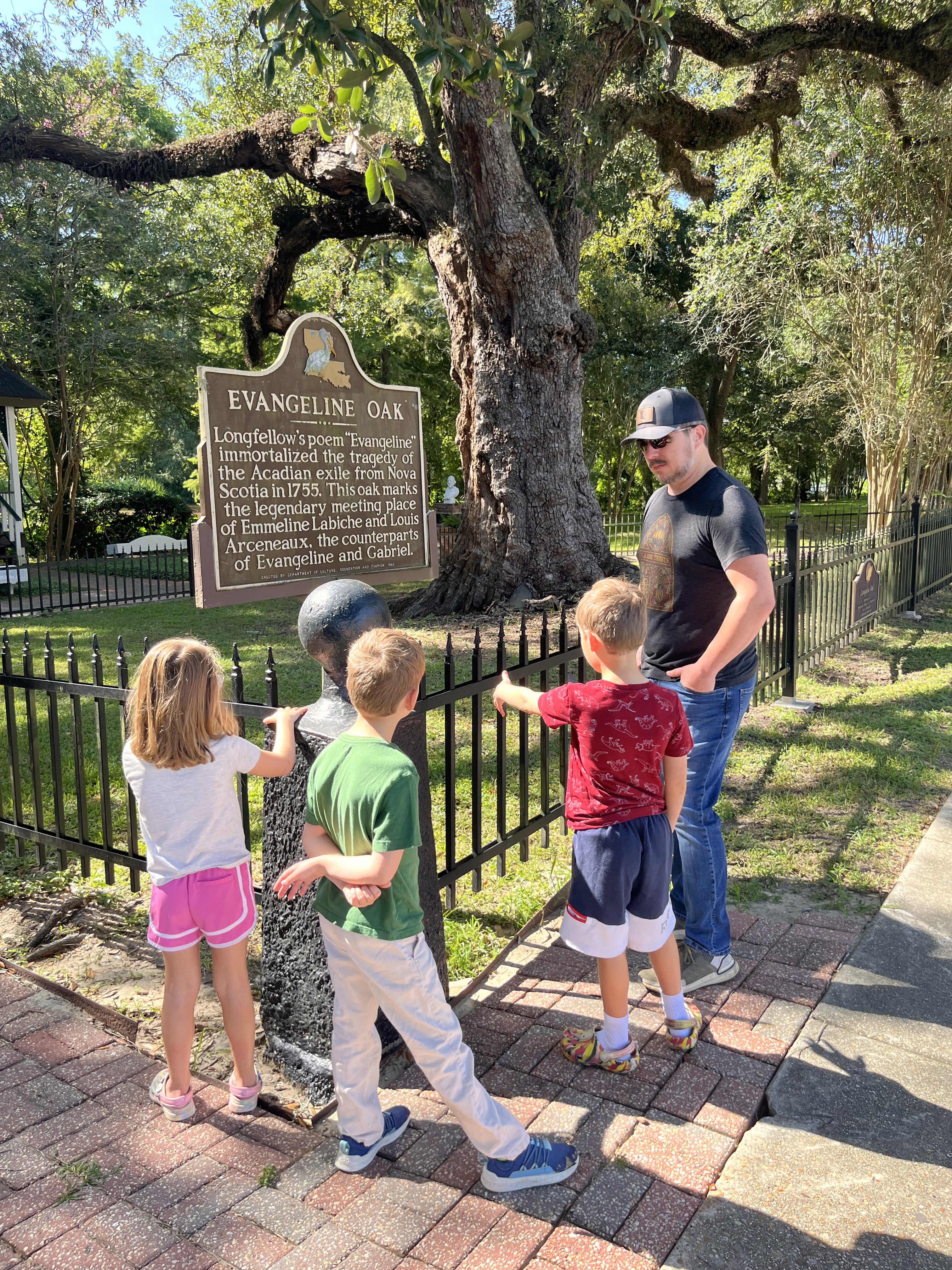
We bring bits of Louisiana home with us.
While on our stays in Louisiana, we look for useful or decorative items to remind us of home. Our kids like picking out Louisiana t-shirts to wear to school, especially ones that have alligators or crawfish on them. It gives them a sense of pride to share their Louisiana identity with their classmates.
We also look for other souvenirs that we can use to decorate our home. I’m not talking about trinkets. We look for items that remind us of who we are and where we are from – and that we can use every day. (See my koozie above.)
On our latest trip, our boys picked out an Acadian flag banner for their room. Our little girl got a cute garden flag with a picture of the state on it for hers.
I also love to support local artists. We grew up loving artists like Floyd Sonnier and George Rodrigue and his famous Blue Dog. Now, my favorite Cajun artist is Tony Bernard and we often stop by his studio to pick out a new print.
My husband’s favorite tradition is to pick up frozen boudin and tasso from the grocery store on the way out of town.
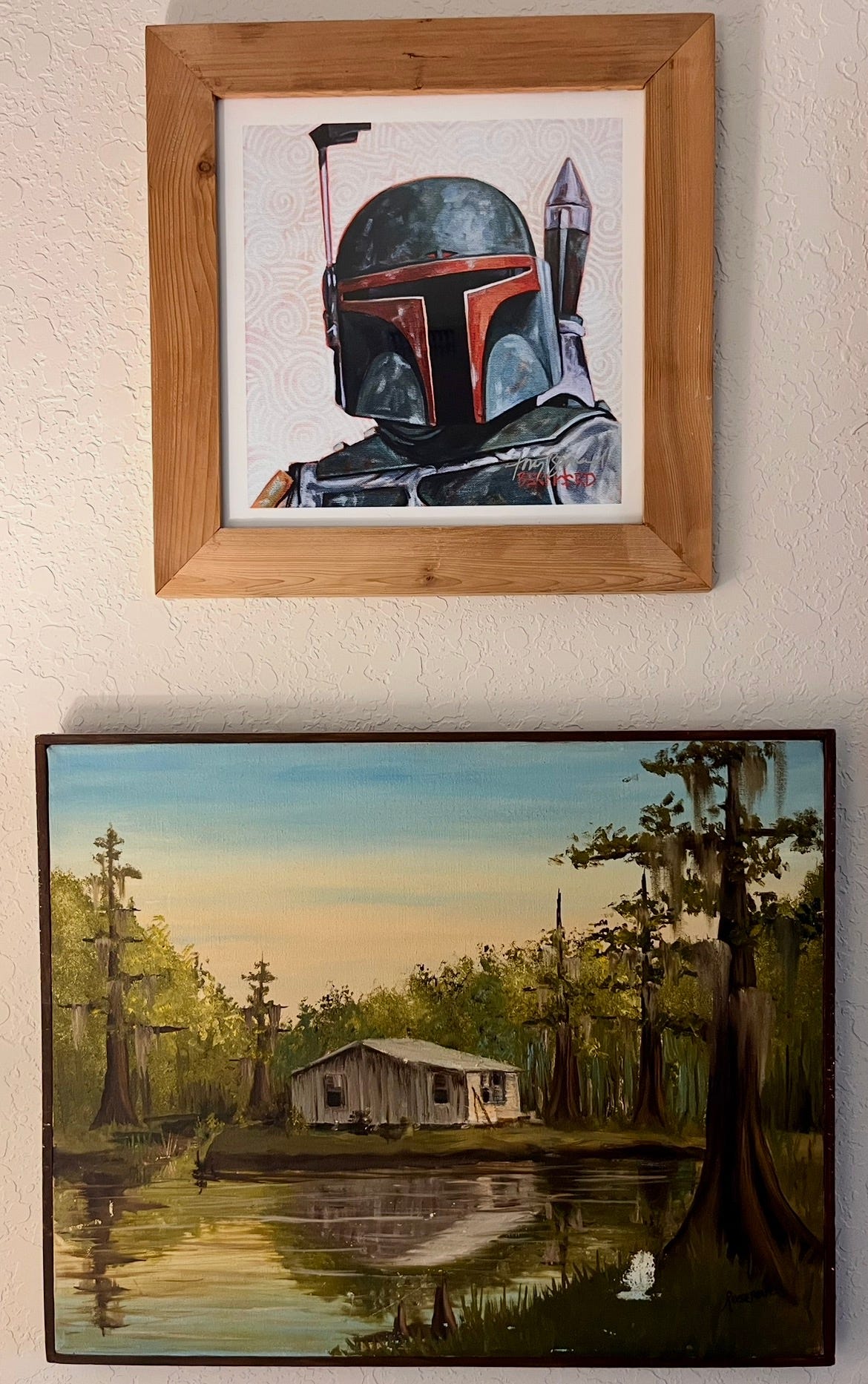
We regularly cook Cajun food and share it with friends.
My husband is a wonderful Cajun cook. We both grew up eating étouffée, gumbo, jambalaya and more, but he was smart enough to ask his grandmas to teach him their recipes.
Now, my husband regularly cooks on the weekends and we often invite friends over to eat with us. It’s fun to eat the food, but it’s also fun to share our food with friends and talk about Louisiana while we eat.
My favorite Cajun cookbook is called Rice Cooker Meals: Fast Home Cooking for Busy People by Neal Bertrand. It’s not a “Cajun” cookbook, but it features *many* Cajun recipes. My two favorites are black-eyed pea & sausage jambalaya and zucchini, butter beans & pasta. I have used these recipes so many times, the book actually falls open to the right pages.
FYI: I am an affiliate with Bookshop.org and I may earn a commission if you shop through this link. I only share affiliate links for items I truly love.
We enjoy Louisiana music as a family.
On our trips home, we always sing Louisiana’s state song, “You Are My Sunshine,” as we cross over the state line. It was written by a two-time former governor, Jimmie Davis.
We also listen to our favorite “Louisiana songs” as we drive along. I have made a list of some of our favorites for you on Spotify. They cover many genres, some traditional Cajun, Creole, swamp pop, and country. There are also a few songs that aren’t by Louisiana artists, but they are about Louisiana.
And before you take a look at the list, know that south Louisianians are very playful people. When you see the song titled “That Butt Thing” on this playlist and wonder why I let my kids listen to it…you can blame my husband. He apparently listened to it in the car with the kids and told them, “Don’t tell mom!” Well, folks, they told me. And the song stayed on the playlist.
We play the games.
South Louisianians love playing games. My favorite is called bourré. It sounds like boo-ray when you say it out loud. This is a game my mother-in-law taught me. She and her friends get together frequently to play, trash talk each other, and generally have fun! You can not go into this game with a thin skin, but it’s a great way to “pass a good time” as we say in Cajun Country.
I am looking forward to teaching my kids bourré when they get a little older and a little better at losing. I’ll put together a guide to how it’s played in a future post.
One thing we do with the kids is a game called paqué. (Pronounced pock-ay) This is an Easter tradition. Each player gets an Easter egg, and they take turns hitting the eggs against each other. If your egg cracks, you lose. Winners walk away with bragging rights, and not much else.
We embrace our new culture.
Being part of a culture whose language was suppressed makes us value other cultures. Moving away has made us appreciate south Louisiana culture more, and one of the joys of moving to a new place has been learning about the culture here. Texas has its own rich history and melting pot of cultures.
Though they are different from what we grew up with, my husband and I have been thrilled to learn about the Tejano, Tex-Mex, and even German cultures around us. Teaching our kids about these other cultures does not diminish their love for ours. Instead, it teaches them that native languages, music, and foodways are special and worth preserving.
🍒🍒🍒
Before you go…What’s something from your culture that is worth keeping?
Let me know in the comments.
Resources if You’re Cajun Curious
My favorite Louisiana t-shirt shop, Parish Ink
Louisiana artist, Tony Bernard
Click here to hear some real Louisiana French spoken by singer Jourdan Thibodeaux
These Cajun Mamas crack me up
Free Louisiana color sheets
I share a bit from our summer trip to Louisiana here:

Lafayette Hebert here! The number of times I tell my son to see-toi every day when he tries to stand up in his high chair… Mais la.
We’re about to move away and I’m so sad because I love the culture. I’m hoping to preserve it for our family so our kids still feel a connection to where they’re from.
Another wonderful glimpse into Cajun culture. I'm excited to learn the rules for bourré and play it with my in-laws. We love a good card game!
I grew up in Southeast Missouri which honestly feels more like growing up in the South than the Midwest. When I moved to Columbia, MO, for college, I was shocked to learn that none of my new friends had heard of sausage balls. They were a staple at every party and family gathering I attended for the first 18 years of my life!